01
Consented screening support
Investigational voice analysis supports—not replaces—qualified assessment.
 Preventive health
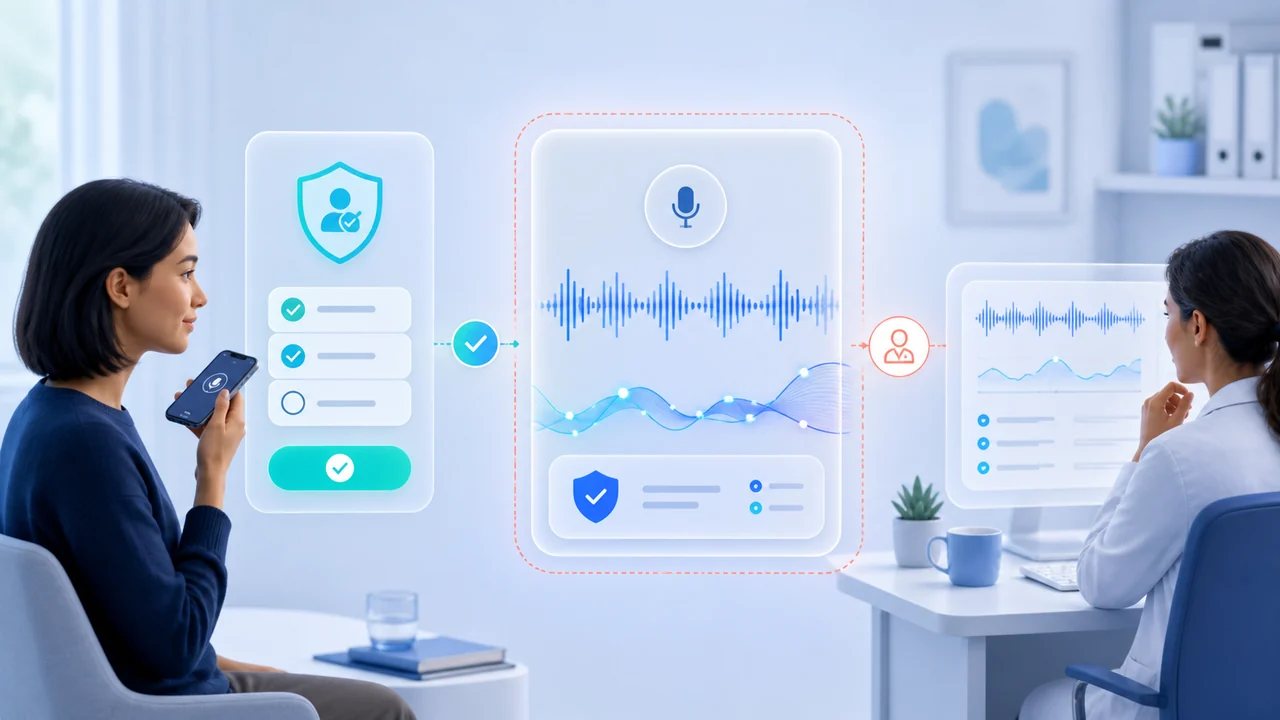
An investigational screening-support concept using consented voice analysis, guided by principles from WHO ethics guidance and qualified clinical review.
NivaCare is exploring consented AI analysis of speech patterns together with mental health screening guided by principles from WHO ethics guidance. The capability is intended to surface possible changes for qualified clinician review—not diagnose a condition, assess an emergency or replace a clinical interview.
Investigational voice analysis supports—not replaces—qualified assessment.

Screening support is not diagnosis or emergency assessment.

Mobile-first workflows support varied Indian care settings.
In a governed pilot, voice-analysis signals may be considered with validated screening instruments selected for the intended setting and the patient's history, governed by WHO ethics principles. The result is not a diagnosis—it is investigational context that helps the clinician decide what deserves a conversation.
From a neighbourhood clinic to a remote consultation, NivaCare is designed to bring preventive mental health attention into the routine doctor-patient relationship across Tier 1, Tier 2 and Tier 3 locations in India.
Support natural conversations across Indian languages, regional dialects and everyday code-switching—subject to representative local validation.
Bring a preventive mental wellbeing layer into general practice, chronic-care visits and telehealth—not only specialist settings.
Help local clinicians recognise possible changes and connect patients to the appropriate next level of support.
Voice analysis is one consented, investigational screening input—not a diagnosis. Any deployment requires representative Indian-language validation, bias monitoring, privacy safeguards, clear escalation and qualified clinical judgement.
No autonomous diagnosis. Signals are interpreted with an interview, validated tools and the patient's complete clinical context.
Voice analysis must be transparent, purpose-limited and optional, with clear controls over capture, access and retention.
Performance must be evaluated across languages, dialects, ages, genders, devices and clinical settings before deployment.
No. It is an investigational, consented screening input for qualified clinical review.
Representative validation, bias monitoring, privacy controls and clear escalation must shape any pilot.
No. It must not replace emergency assessment, a clinical interview or professional judgement.

Make mental wellbeing visible within the everyday care relationship—without reducing a person to a score or creating another disconnected tool.